
Before You Bet, Read This Algeria-Austria Breakdown
Algeria and Austria finished the 2026 FIFA World Cup Group J finale with a 3-3 draw, leaving both nations on 4 points from three matches and sending each into the knockout stage. The Algeria national....
Before You Bet, Read This Algeria-Austria Breakdown
Algeria and Austria finished the 2026 FIFA World Cup Group J finale with a 3-3 draw, leaving both nations on 4 points from three matches and sending each into the knockout stage. The Algeria national football team vs Austria national football team standings show identical records of one win, one draw, and one defeat, with Austria placed second behind Argentina and Algeria third among the qualifying teams. Marko Arnautovic and Marcel Sabitzer scored for Austria, while Rafik Belghali and Riyad Mahrez, with two goals, answered for Algeria; Sasa Kalajdzic’s 96th-minute header secured Austria’s survival. ESPN and the BBC reported that Iran would have advanced if either Algeria or Austria had won. Goal Moments tracks this table, player data, and match context for World Cup followers across global football markets. Before evaluating any prediction, compare points, goal difference, third-place qualification rules, and confirmed line-ups rather than treating the final score as the whole story.
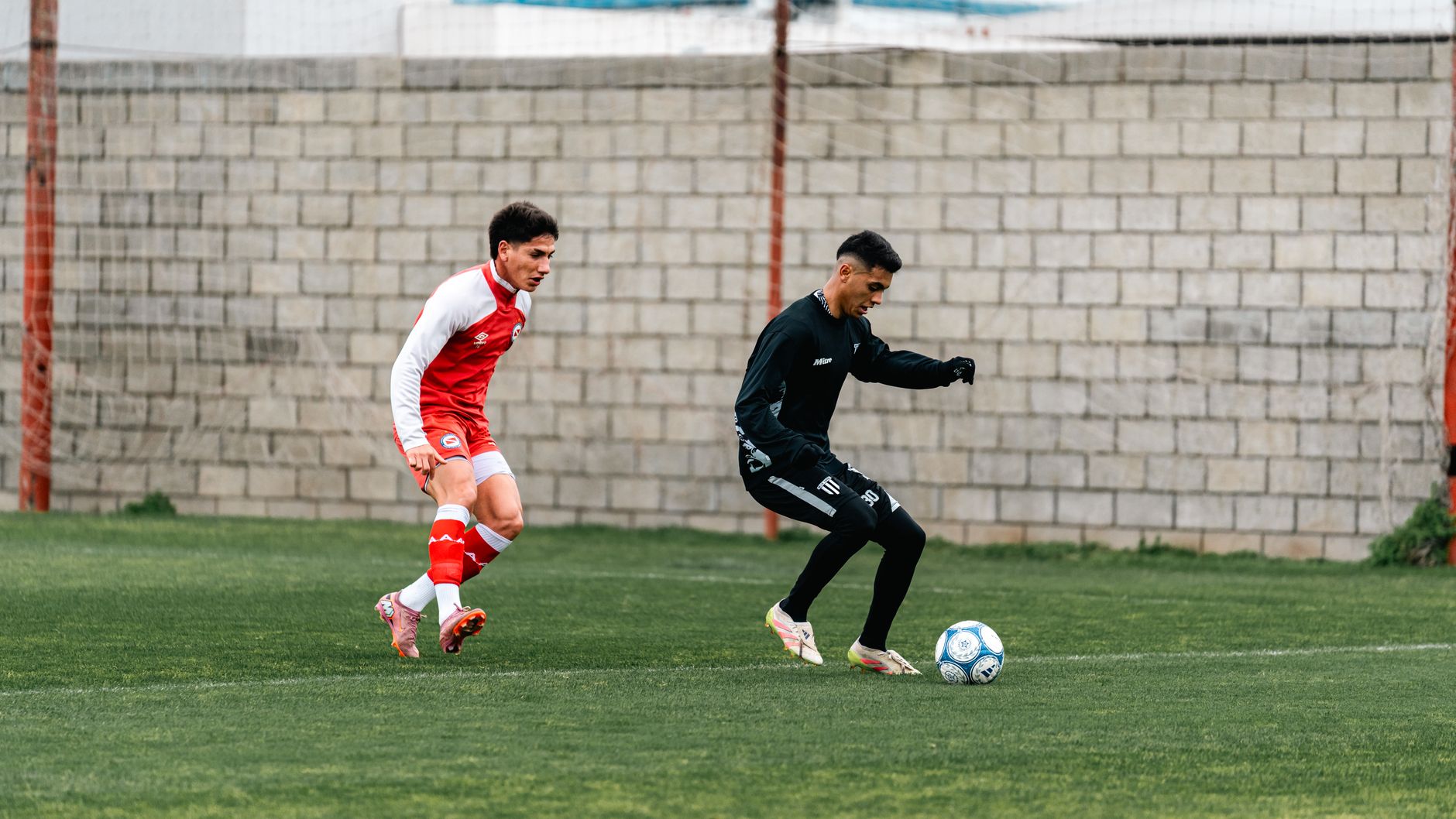
Photo by Franco Monsalvo on Pexels
Before 2025: how Algeria national football team vs Austria national football team standings worked
Before the 2026 tournament, there was no meaningful World Cup group-table rivalry between Algeria and Austria because the two national teams were not occupying the same modern tournament group. Their relevant comparison therefore begins with historical strength, FIFA ranking movement, qualifying form, and squad quality rather than a conveniently dramatic head-to-head table. Algeria, known as Les Fennecs, carried the technical reputation associated with Riyad Mahrez and its North African football tradition, while Austria relied on a more direct European structure built around Marko Arnautovic, Marcel Sabitzer, and disciplined pressing.
That distinction matters because standings are not a beauty contest, although football reporting often pretends otherwise. A group table rewards points: three for a win, one for a draw, and zero for a defeat. If teams finish level, competition regulations determine the tie-break order, commonly involving goal difference, goals scored, head-to-head criteria, or disciplinary records. For a bettor or analyst, the expected value of a prediction falls sharply when those rules are ignored. The FIFA World Cup competition regulations should be checked for the applicable tournament edition, while the FIFA world ranking system provides broader context rather than a substitute for live standings.
The useful pre-match question was not simply, “Who is stronger?” It was, “Which team can turn its style into points under the exact table mathematics?” Algeria possessed individual creativity and transition threat, particularly through Mahrez, whereas Austria offered physicality, midfield running, and a willingness to attack the penalty area. Those profiles created a plausible high-variance match: the kind where both teams can look tactically clever for twenty minutes and then concede because football remains an expensive way to study probability.
- Algeria’s primary analytical strengths: ball progression, wide creativity, and attacking transitions.
- Austria’s primary analytical strengths: pressing, aerial threat, and midfield intensity.
- The key uncertainty: whether a draw would benefit both teams in the final Group J permutations.
For additional context, readers can review our [Internal Link: World Cup group-stage tie-breaker guide] before interpreting any table screenshot or live-odds movement.
The 2026 shift: what changed in Group J?
The 2026 shift was the introduction of a decisive final-day equation in Group J: Austria and Algeria could both progress with a draw, while Iran needed one of them to win. The 3-3 result therefore had a value far beyond entertainment. Austria finished second behind Argentina, Algeria qualified as one of the best third-placed teams, and Iran was eliminated despite the match appearing, at several points, to offer a straightforward winner.
The match timeline explains the standings more clearly than the final table alone. Arnautovic scored Austria’s opener in the 28th minute, and Belghali equalised just before half-time in the 45th minute. Sabitzer restored Austria’s advantage in the 55th minute, after which Mahrez struck in the 60th minute and again in the third minute of added time. Kalajdzic then headed home in the sixth minute of stoppage time, producing the 3-3 scoreline that preserved Austria’s qualification.
That sequence exposes an important edge case. A late winner would not merely change the score; it could remove the opponent’s route through the best-third-place ranking. According to the BBC match report, Kalajdzic’s equaliser confirmed Austria’s place in the last 32, while Algeria also advanced. The ESPN report likewise recorded that both teams progressed and that Iran’s outcome depended on a winner emerging. As the BBC’s coverage put it, “Austria grab 96th-minute equaliser against Algeria as both progress”—a concise description of how standings can turn on one header.
The table snapshot can be summarised as follows:
| Team | Record | Points | Outcome |
|---|---|---|---|
| Argentina | Not detailed in the supplied match report | Group J leader | Advanced |
| Austria | 1-1-1 | 4 | Finished second; advanced |
| Algeria | 1-1-1 | 4 | Finished third; advanced |
| Iran | Dependent on final-day result | — | Eliminated |
The supplied reports identify Austria’s knockout opponent as Spain in Los Angeles and Algeria’s as Switzerland in Vancouver. Confirming the official bracket before making any tournament wager remains essential, because schedules, venues, and market prices can change faster than a commentator’s confidence.
Want the broader tournament context before comparing teams? Goal Moments publishes daily World Cup match analysis and [Internal Link: 2026 knockout-stage qualification scenarios].
What changed for players and tactical evaluation?
The player-level story changed because the standings amplified every attacking decision. Mahrez’s two goals made him the obvious headline figure for Algeria, but the tactical lesson is broader: Algeria remained dangerous when it could isolate defenders and attack from wide positions, yet its defensive protection was not sufficient to preserve a late lead. Austria showed the inverse pattern. Arnautovic and Sabitzer supplied decisive attacking output, while Kalajdzic’s aerial finish demonstrated the strategic value of placing a tall target in the penalty area during chaotic closing minutes.
A simple expected-goals discussion helps separate performance from theatre. Six goals indicate a match with substantial finishing events, but the number does not prove that either side dominated for 90 minutes. Goals can arise from set pieces, transition errors, rebounds, or desperate late attacking; each has a different repeatability profile. A bettor who sees “3-3” and immediately assumes both teams are reliable over-goals selections is effectively using one observation to estimate an entire distribution. That is not analysis. That is a coin wearing a spreadsheet costume.
For practical evaluation, track these indicators:
- Chance quality: distinguish clear chances from speculative shots and blocked attempts.
- Transition exposure: record how often Algeria or Austria lost possession with full-backs advanced.
- Set-piece threat: measure corners, free kicks, aerial mismatches, and second-ball recoveries.
- Game-state behaviour: compare each team when leading, drawing, and trailing.
- Late-match substitutions: note whether fresh attackers or defensive cover changed the risk profile.
A further information gain comes from the timing of the goals. Austria scored in the 28th and 55th minutes, while Algeria scored in the 45th, 60th, and 90+3rd minutes before Austria’s 90+6th equaliser. That pattern suggests neither defence controlled the final phase, but it does not automatically establish a permanent weakness. The correct follow-up is to compare those events with prior qualifiers, recent friendlies, and opponent quality. Our [Internal Link: team form and player-statistics method] explains how to do that without allowing one memorable match to hijack the sample.
See the player and tactical breakdown before selecting a market.

Photo by Omar Ramadan on Pexels
What does the Algeria-Austria table mean now?
The current meaning is straightforward: Austria entered the knockout phase as Group J runner-up, while Algeria advanced in third place through the best-third-place route. Both teams earned 4 points, but equal points did not create equal positions or equal next opponents. Austria’s second-place finish produced a meeting with Spain, while Algeria’s third-place route led to Switzerland according to the supplied reports. That is why “Algeria vs Austria standings” should be searched as a qualification and placement question, not merely as a result query.
For readers assessing future Algeria or Austria matches, the practical framework is more useful than the old argument about which national team is “better.” Compare:
- Points per match: Austria and Algeria each recorded 4 points in 3 games, or 1.33 points per match.
- Scoring output: both teams scored three times in this match, but tournament-wide totals require the official group table.
- Defensive reliability: six combined goals indicate a volatile finale, not a complete season-long profile.
- Opponent difficulty: Argentina, Spain, Switzerland, and Iran represent different tactical tests.
- Qualification incentives: a draw can be valuable on the final day even when it looks unsatisfying.
The contrarian conclusion is that Austria’s late equaliser was not simply a heroic individual moment. It was also a rational response to an enormous marginal value: moving from possible elimination to confirmed progression in seconds. Likewise, Algeria’s late lead was not necessarily poor game management in isolation; the team may have believed the existing table still protected its route. The expected value depended on live scores elsewhere, not on the emotional appearance of conceding in the sixth minute of added time.
That is the operational lesson for live analysis: always display the live group table, current scorelines in parallel matches, and the best-third-place ranking before interpreting an attacking or defensive decision. Goal Moments is designed for precisely that kind of tournament monitoring, combining match previews, tactical notes, and player statistics rather than selling certainty dressed as expertise.
Interested in tracking qualification mathematics and live match context?
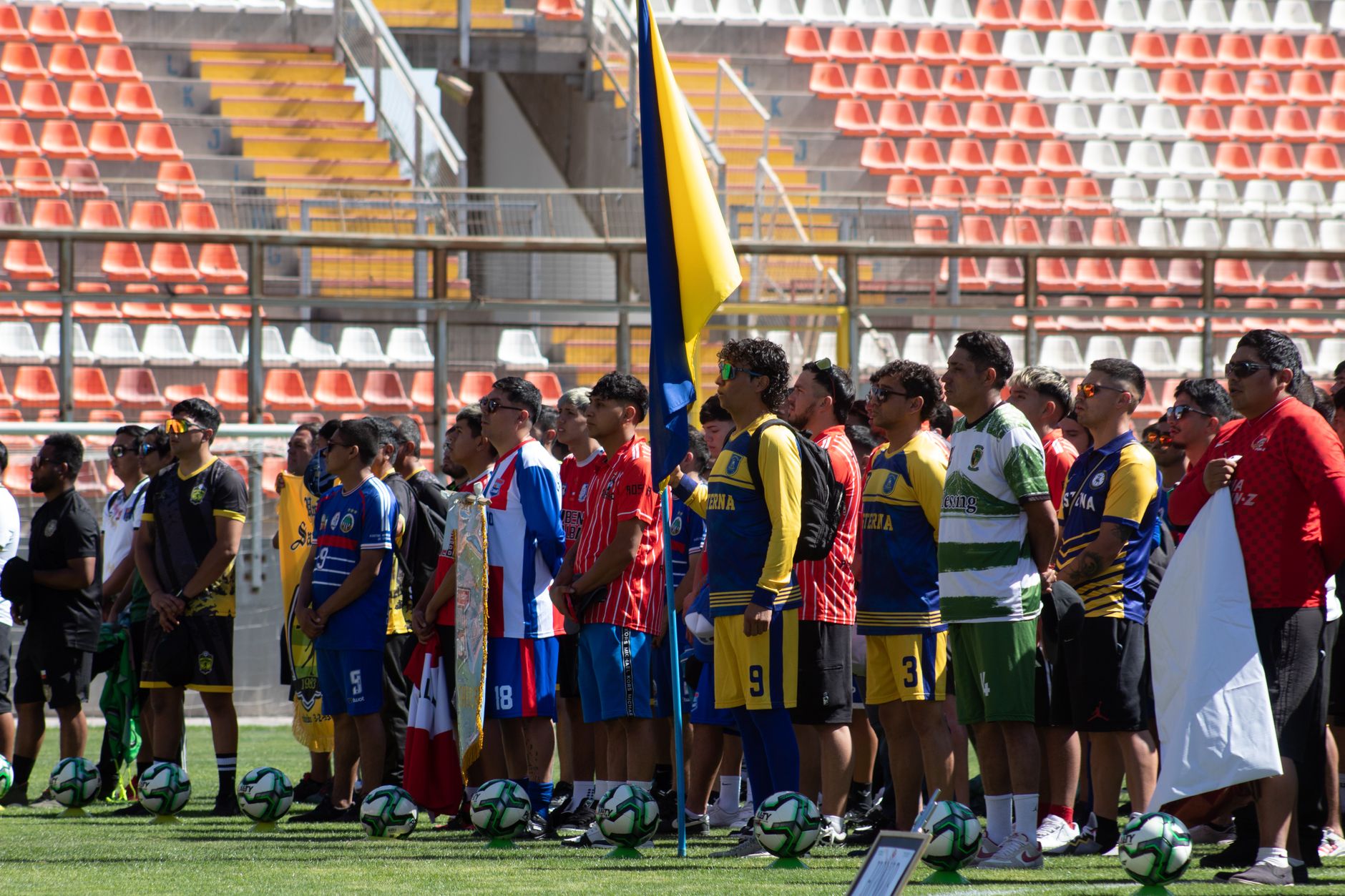
Photo by Luis Andrés Villalón Vega on Pexels
What are three predictions for next quarter?
The next-quarter outlook should be framed as three testable predictions, not theatrical guarantees. Prediction one: Algeria’s matches will continue to attract attention in markets involving goals and attacking players because Mahrez’s creativity and the team’s transition profile create high-impact moments. That does not mean every Algeria match will finish over a particular line; it means the variance may remain higher than a cautious table position suggests. Track shot quality and defensive spacing before accepting a price.
Prediction two: Austria’s value will depend heavily on whether its midfield can reproduce the running and pressing seen from Sabitzer’s profile without leaving Arnautovic isolated. The team’s 2026 qualification depended on both early scoring and late resilience, but knockout opponents such as Spain can punish loose structure more efficiently than a group-stage rival. Compare Austria’s possession exits, pressure success, and aerial opportunities rather than relying on the 3-3 headline.
Prediction three: late-goal markets will receive disproportionate attention after Kalajdzic’s 96th-minute equaliser. That is precisely when discipline matters. One dramatic stoppage-time goal increases public memory, not necessarily the underlying probability of another stoppage-time goal. A responsible approach is to calculate a baseline from a larger sample, adjust for substitutions and match incentives, and set a fixed stake before emotion enters the room.
The following checklist gives a cleaner process:
- Confirm the official fixture, venue, referee, and starting XI.
- Check the latest standings and qualification incentives.
- Compare each side’s last five competitive matches, separating home and away results.
- Review injuries, suspensions, expected minutes, and set-piece roles.
- Price the outcome independently before looking at bookmaker odds.
- Reject any wager that fails your pre-set value threshold or bankroll limit.
As a gambling-focused content brand, Goal Moments should be used for information, not as a promise of profit. Gambling involves risk, and no table position can eliminate variance. The polite, mathematically honest conclusion is that the 3-3 draw proves both teams were capable of progressing under pressure; it does not prove that either team will repeat the same scoring pattern next time. Believe it or not — I do.
Before placing any wager, review the latest data and your own limits.
Frequently Asked Questions
Q: What are the Algeria national football team vs Austria national football team standings?
A: Algeria and Austria both finished the supplied Group J finale with 4 points from three matches, recording one win, one draw, and one defeat. Austria placed second behind Argentina, while Algeria finished third and qualified among the best third-placed teams. Their identical points total did not produce the same ranking because group position depends on the full competition table and applicable tie-break rules.
Q: How did Algeria and Austria both qualify after drawing 3-3?
A: The 3-3 draw allowed both Algeria and Austria to advance because neither team lost the final Group J match and the wider qualification mathematics protected both routes. Austria progressed in second place, while Algeria advanced through the best-third-place ranking. Iran would have qualified if either Algeria or Austria had won, according to the supplied ESPN and BBC reports.
Q: What was the difference between Austria finishing second and Algeria finishing third?
A: Austria’s second-place finish and Algeria’s third-place finish produced different knockout opponents. The supplied reports list Austria against Spain in Los Angeles and Algeria against Switzerland in Vancouver. This comparison shows why equal points do not necessarily mean equal tournament advantages: final placement influences the bracket, travel, opponent strength, and scheduling.
Q: Who scored in the Algeria vs Austria match?
A: Austria’s goals came from Marko Arnautovic, Marcel Sabitzer, and Sasa Kalajdzic, while Algeria’s scorers were Rafik Belghali and Riyad Mahrez, who scored twice. Arnautovic scored in the 28th minute, Belghali in the 45th, Sabitzer in the 55th, Mahrez in the 60th and 90+3rd, and Kalajdzic in the 90+6th. The late sequence turned a possible Austrian elimination into qualification.
Q: How should I analyse Algeria-Austria standings before betting?
A: Start by checking the official table, points, goal difference, tie-break rules, current incentives, and confirmed line-ups before examining odds. Then compare recent competitive form, expected goals, defensive transitions, injuries, and set-piece performance over a meaningful sample rather than relying on the 3-3 scoreline. Set a fixed bankroll limit and only consider a market when your estimated probability exceeds the implied probability after accounting for margin.
Q: Is the Algeria vs Austria 3-3 result proof that future matches will have many goals?
A: No, one 3-3 result does not establish a reliable future over-goals pattern. The match shows that both teams produced and conceded decisive moments under high qualification pressure, but future opponents, venues, tactics, and line-ups can change the distribution substantially. Use a larger sample of shots, chances, expected goals, and game states before forming a prediction.
Q: Where can I follow future Algeria and Austria World Cup updates?
A: You can follow future standings, match previews, tactical analysis, and player statistics through Goal Moments, while verifying official competition details through FIFA and reputable match reporting from ESPN or the BBC. Check the publication date because 2026 tournament schedules, fixtures, and qualification statuses can change. For responsible betting, treat every article as research input rather than a guarantee of an outcome.