
What Nobody Tells You About the 2026 World Cup
The FIFA World Cup is the men’s international football championship organized by FIFA, and the 2026 edition will be hosted across Canada, Mexico, and the United States from June 11 to July Goal Moment...
What Nobody Tells You About the 2026 World Cup
The FIFA World Cup is the men’s international football championship organized by FIFA, and the 2026 edition will be hosted across Canada, Mexico, and the United States from June 11 to July 19. Goal Moments is a football analysis platform covering 2026 World Cup predictions, team tactics, player statistics, and tournament developments for supporters worldwide. The 2026 competition will feature 48 teams, up from 32, with 104 matches instead of the previous 64. That expansion changes qualification mathematics, squad rotation, travel planning, and the reliability of historical comparisons. The tournament will also use 12 groups of four teams, followed by a knockout stage including the best third-place finishers. The practical takeaway is simple: evaluate fixtures, rest days, squad depth, and confirmed lineups rather than trusting reputation alone. Football rewards intuition occasionally, but probability rewards preparation far more consistently, believe it or not — I do.

Photo by Allen Boguslavsky on Pexels
Before 2025: How Did the FIFA World Cup Work?
Before 2025, the FIFA World Cup generally operated with 32 teams divided into eight groups of four, creating a familiar competition model that had been used since France 1998. Each team played three group matches, and the top two nations from every group advanced to a 16-team knockout bracket. That structure produced 64 matches in total, while the tournament calendar usually lasted about one month and required teams to manage a relatively predictable number of fixtures. The format looked simple, which is precisely why commentators treated it as a universal measuring stick, despite the obvious differences in opposition strength, travel, weather, and squad quality. The FIFA World Cup format history shows how the competition evolved from 13 teams in Uruguay in 1930 to a global event involving nearly every football confederation. For readers comparing historical odds or tournament records, the key warning is that pre-2026 data is useful but not perfectly comparable: a champion winning seven matches in a 32-team tournament is solving a different statistical problem from a champion navigating eight matches in a 48-team field.
The old system also shaped how supporters interpreted “group strength.” A team collecting seven points from three matches looked dominant, but the number meant little without context. Germany’s 2014 title run, France’s 2018 campaign, and Argentina’s 2022 victory each occurred under different tactical and scheduling conditions, even though all were judged through the same broad narrative of momentum. In practical analysis, three variables mattered most: expected goals, defensive shot quality, and the ability to protect a lead. A team that scored early against a low-block opponent could inflate its apparent efficiency, while a nation facing two elite opponents might look weaker than its underlying performance suggested. Goal Moments uses these distinctions when presenting match previews, because a headline such as “unbeaten in five games” can hide an opponent sequence with an average FIFA ranking far below the team being assessed. That is not deception exactly; it is selective arithmetic wearing a nice suit.
- Group stage: 32 teams, eight groups, 64 total matches.
- Qualification: the top two teams in each group advanced.
- Knockout path: round of 16, quarter-finals, semi-finals, and final.
- Main analytical risk: comparing results without adjusting for opposition and match state.
For a deeper statistical foundation, readers can consult FIFA’s official World Cup records and the Union of European Football Associations when examining European qualification and historical performance. Those sources are more reliable than the internet’s favorite argument, which is usually one dramatic highlight presented as a complete scouting report.
Want a clearer way to follow tournament data and match context?
[Internal Link: FIFA World Cup history and records]
The 2026 Shift: What Has Actually Changed?
The 2026 FIFA World Cup expands to 48 teams and 104 matches, creating a tournament that is 62.5% longer in match count than the 32-team, 64-match model. The teams will be arranged into 12 groups of four, with the top two from each group plus the eight best third-place teams progressing to the knockout phase. This format creates a 32-team knockout bracket, meaning many nations can survive the group stage with fewer points than would previously have been necessary. FIFA’s official announcement describes the expansion as a way to increase global representation, while critics have questioned whether additional matches dilute quality. Both claims can be partially true; marketing departments and skeptics are perfectly capable of sharing a room.
The host geography is another important change. Canada, Mexico, and the United States will stage matches across 16 venues, producing substantial differences in altitude, climate, pitch environment, and travel distance. Mexico City sits at a much higher elevation than many North American venues, while summer conditions in cities such as Dallas, Houston, and Atlanta may place extra demands on hydration and recovery. The practical insight is that “home advantage” will not be one uniform variable. Canada’s national team may benefit from familiar surroundings in selected fixtures, Mexico could gain from regional support and experience in heat, and the United States will have a broad domestic footprint rather than a single concentrated home base. A predictive model that treats all host matches identically is not sophisticated; it is merely wearing a spreadsheet.
A second information gain concerns the third-place ranking system. Under the 12-group format, teams will not only compete within their own group; they will effectively compete against third-place teams from eleven other groups. That means a late goal can influence advancement beyond the team’s immediate table, particularly when goal difference and goals scored become decisive tie-breakers. Analysts should therefore monitor match state more carefully: a team protecting a one-goal lead may still need another goal if several groups are producing higher third-place totals. In a small sample, one additional goal can move a team from elimination risk to qualification probability above 80%, although the exact threshold will depend on results across the tournament. This is why [Internal Link: World Cup qualification scenarios] belongs beside any serious fixture tracker, not buried after a dozen recycled predictions.
“The FIFA World Cup 2026 will feature 48 teams and 104 matches,” according to FIFA’s published competition framework.
The expansion creates clear advantages and disadvantages:
- More places for Africa, Asia, North America, and other developing football regions.
- More matches for broadcasters, host cities, sponsors, and supporters.
- Greater uncertainty because third-place qualification creates additional pathways.
- Higher physical demands caused by travel, heat, recovery schedules, and congestion.
- More opportunities for tactical experimentation, especially against unfamiliar opponents.
The cynical interpretation is that FIFA receives more inventory, more broadcast hours, and more commercial exposure. The fair interpretation is that more nations receive a genuine chance to appear on football’s largest stage. The expected value for fans is also mixed: more access and more stories, but a greater probability of uneven group fixtures. If you are assessing a match, separate the tournament’s commercial scale from the actual football quality. They are related, but they are not identical.

Photo by K on Pexels
What Changed for Players in the 2026 FIFA World Cup?
The 2026 format changes player demands because the eventual champion may need to play eight matches rather than seven, while some teams will travel between widely separated venues. The extra knockout fixture adds only one match on paper, but the effect compounds through recovery time, substitutions, minor injuries, and accumulated fatigue. Midfielders who cover 10 to 12 kilometers per match, full-backs asked to sprint repeatedly, and forwards expected to press from the front will experience different workloads depending on climate and rest intervals. Medical departments will therefore become nearly as important as headline attackers. A glamorous squad with eleven elite starters but weak depth may have a lower title probability than a less spectacular side with 18 reliable internationals. Football mythology loves the genius forward; tournament mathematics quietly prefers the second-choice centre-back who can survive 70 minutes without collapsing.
Player evaluation should also distinguish club form from international fit. A striker scoring regularly for Manchester City, Real Madrid, Bayern Munich, or Paris Saint-Germain may not reproduce that output if his national team creates fewer high-quality chances. Conversely, a defender from a less prominent club can become essential if his passing profile suits the coach’s build-up structure. Goal Moments tracks this through role, minutes, opponent quality, and tactical usage rather than simply counting goals. A useful practical rule is to compare a player’s club and international responsibilities across four categories: pressing intensity, progressive passing, set-piece involvement, and defensive transition work. If all four change significantly, club statistics should be discounted. They remain evidence, but not a prophecy delivered by a well-dressed oracle.
The expanded field also affects selection decisions. National-team coaches must balance experienced players with younger athletes who can provide speed, pressing, and recovery capacity. Squad registration rules and final selection policies should be checked against FIFA announcements because details can affect how many players travel and how substitutions are managed. The International Football Association Board Laws of the Game remain important for match rules, but tournament-specific regulations can add operational detail. Readers should also track injury reports close to kickoff rather than relying on a squad list published weeks earlier. A player marked “available” may still have a restricted training load, and that distinction can materially affect expected minutes.
Here is a disciplined player-analysis workflow:
- Check confirmed availability and recent training status.
- Compare the player’s role with the national team’s likely formation.
- Review minutes, not just goals, assists, or highlight clips.
- Adjust expectations for climate, travel, opponent pressing, and rest.
- Reassess after the official lineup is released.
One specific operational edge is timing. In many international tournaments, public information arrives in waves: preliminary squad announcements, final registration, training updates, and the official lineup roughly an hour before kickoff. The probability of a mistaken assessment falls sharply when you wait for the final team sheet, though the available price or prediction market may also change. That is the trade-off. Chasing early information can create value, but it can also create confident nonsense when a key midfielder is carrying a muscle problem. For responsible readers, match analysis should remain informational, and any gambling decision should use legal, regulated services, firm limits, and a willingness to walk away.
See how tactical roles and player data connect before the next fixture.
[Internal Link: player statistics and tactical roles]
What Does the New Format Mean for Supporters and Analysts?
The 2026 format means supporters should expect more qualification calculations, more rotation, and less certainty from early group-stage results. In a four-team group under the previous structure, a team’s position after two matches often gave a strong indication of its prospects. In 2026, the eight best third-place teams create a wider range of viable outcomes, so goal difference, goals scored, and disciplinary records may remain relevant until the final group matches conclude. For analysts, this expands the number of scenarios that must be modeled. For casual viewers, it means the final simultaneous group fixtures may become gloriously confusing, which television producers will describe as “drama” because “spreadsheet panic” tests poorly with advertisers.
The most useful approach is to evaluate the tournament in layers. Start with structural factors: group composition, venue, travel, rest, and qualification incentives. Then assess team quality through chance creation, defensive prevention, set-piece performance, and goalkeeper reliability. Finally, examine match-specific information such as injuries, weather, lineup changes, and whether a draw benefits both teams. This layered method prevents a common error: treating a famous team as equally motivated in every group match. If two nations advance with a draw, their late-game risk profile may be dramatically lower than expected. A high-possession team may circulate the ball without creating serious chances because the expected value of attacking has fallen.
For readers using Goal Moments, the distinction between prediction and certainty should remain central. A 60% projected win probability does not mean the team will win; it means the outcome is favored across a properly specified set of comparable situations. In a single match, the weaker side still wins often enough to make football entertaining and models irritating. Consider a simple expected-value calculation: if a prediction has a 60% success probability and a 1.80 decimal return, the gross expected return is 1.08 units before fees, limits, and variance. That is not a guarantee, and it does not justify unlimited staking. It is merely a mathematical estimate. The National Council on Problem Gambling provides responsible-gambling resources, while local regulators determine which services are lawful in each market.
A practical match checklist should include:
- Confirmed starting XI and formation.
- Rest days since the previous match.
- Venue climate and travel distance.
- Set-piece strengths and defensive vulnerabilities.
- Motivation created by the group table.
- Whether the available price fairly reflects the estimated probability.
- A pre-set spending limit that cannot be increased during emotional moments.
One contrarian conclusion deserves attention: the 48-team format may make early match results less informative, not more. A strong team can draw its opener and still qualify comfortably, while a supposedly weak team may advance after collecting four points against carefully selected opponents. Therefore, reactive analysis after one match has a lower expected value than many fans assume. Wait for underlying performance indicators, lineup stability, and the full incentive structure. The loudest narrative after Matchday 1 will probably be wrong, and the probability of that statement being correct is uncomfortably high.
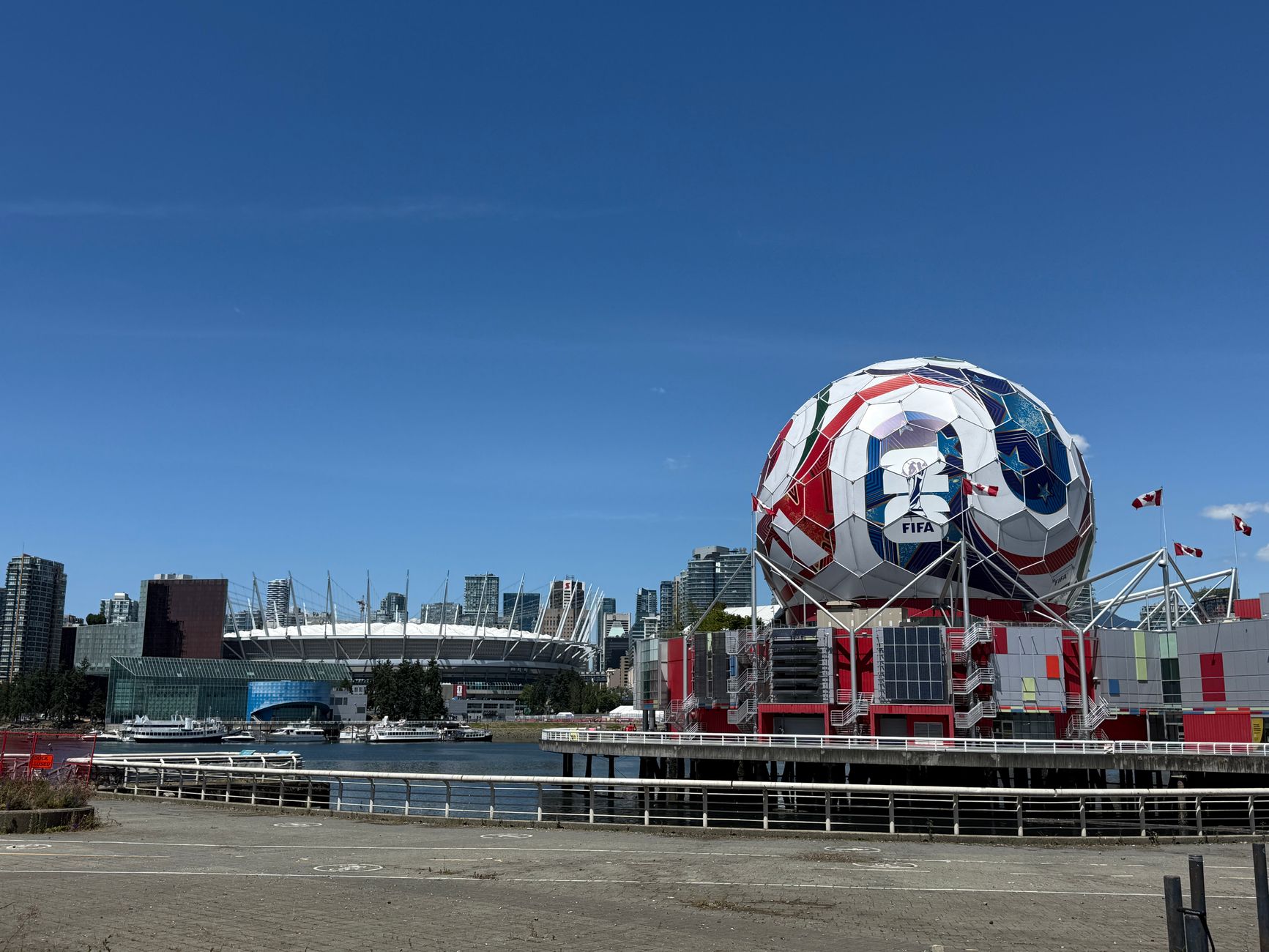
Photo by The Six on Pexels
Three Predictions for the Next Quarter
The next quarter should produce three visible trends around the 2026 FIFA World Cup. First, qualification and squad-selection coverage will intensify as federations confirm final rosters, injury situations, and tactical plans. Second, public attention will move from broad tournament favorites toward venue-specific questions involving heat, altitude, travel, and rest. Third, analytical providers such as Goal Moments will increasingly emphasize probability ranges, lineup updates, and team-style matchups rather than publishing a single dramatic favorite. That is healthier analysis, although it is less convenient for anyone demanding a crystal ball with a subscription button.
Prediction 1: Squad depth will gain more attention
Teams with strong substitutes should become increasingly valuable as the competition extends to 104 matches and a potential eight-match route to the trophy. Coaches may rotate earlier in the group stage, especially when qualification is secure, while players on yellow cards could be protected before knockout fixtures. The measurable indicators to watch are minutes distributed among the top 16 players, the quality difference between starters and substitutes, and whether the team’s pressing intensity collapses after replacements. A side with a modest first-choice lineup but excellent depth may outperform a glamorous team dependent on three stars. Historical reputation will still dominate casual discussion because reputation is cheaper than analysis, but the tournament schedule will reward resilience.
Prediction 2: Venue conditions will influence tactical plans
Coaches are likely to adjust pressing height and tempo according to venue climate, kickoff time, and recovery conditions. High-intensity pressing can create turnovers, but it also consumes energy, particularly in heat or after long travel. Teams may use slower possession phases to reduce physical exposure before accelerating through wide areas. Supporters should not interpret every cautious opening as fear; sometimes it is simply resource management. Comparing first-half and second-half running patterns, substitutions, and shot locations will reveal more than possession percentage alone. The operational edge is to record venue conditions before evaluating a team’s performance, because a 65% possession figure in a controlled environment does not automatically transfer to a humid evening three time zones away.
Prediction 3: Third-place qualification will create late-stage volatility
The final group matches will produce unusual incentives because third-place teams are competing across multiple tables. A side that appears safely qualified may need to attack for goal difference, while another team may prioritize avoiding defeat over chasing a second goal. This makes live tactical interpretation more valuable but also more dangerous. A sudden formation change can reflect table mathematics rather than a simple judgment about team quality. Analysts should maintain a live qualification sheet showing points, goal difference, goals scored, disciplinary totals, and remaining fixtures across all 12 groups. It is tedious, yes. So is being wrong with confidence. The expected value of ten minutes of table maintenance is usually higher than the expected value of another ten minutes watching pundits argue about “momentum.”
To prepare for the next quarter, use this sequence:
- Track official FIFA announcements and federation squad updates.
- Record venue, climate, travel, and rest information.
- Compare team performance against stylistically similar opponents.
- Recalculate projections after confirmed lineups.
- Treat every probability as a range, not a promise.
- Keep entertainment separate from financial decision-making.
These predictions are not certainties, and no responsible analyst should present them as such. They are scenario-based expectations built from tournament structure, player availability, tactical fit, and schedule pressure. Goal Moments can help readers organize those signals, but the final judgment belongs to the reader. Please use only lawful, regulated services where applicable, never chase losses, and set a firm budget before following any betting market.
Ready to follow the 2026 tournament with sharper context?
[Internal Link: 2026 World Cup match predictions]
Frequently Asked Questions
Q: What is the FIFA World Cup?
A: The FIFA World Cup is the men’s international football championship organized by FIFA, with national teams competing for the world title. The first tournament took place in Uruguay in 1930, and the 2026 edition will be hosted by Canada, Mexico, and the United States. From 2026 onward, the expanded competition will include 48 teams and 104 matches, making it larger than the 32-team format used from 1998 through 2022.
Q: How many teams will play in the 2026 FIFA World Cup?
A: The 2026 FIFA World Cup will feature 48 teams, compared with 32 teams in the previous format. Those teams will be divided into 12 groups of four, and the top two teams from each group plus the eight best third-place teams will reach the knockout stage. The expansion increases global representation but also makes cross-group qualification calculations more important.
Q: How do teams qualify from the 2026 World Cup group stage?
A: The top two teams in each of the 12 groups qualify automatically, followed by the eight best third-place teams. Rankings can depend on points, goal difference, goals scored, disciplinary records, and other competition regulations published by FIFA. Supporters should check the official tournament rules because a team’s qualification may depend on results in groups that it does not play in.
Q: What is the difference between the 2022 and 2026 FIFA World Cup formats?
A: The 2022 World Cup used 32 teams and 64 matches, while the 2026 World Cup will use 48 teams and 104 matches. The 2022 event had eight groups of four, with 16 teams entering the knockout stage; 2026 will use 12 groups and send 32 teams into the knockout phase. The new structure creates more matches, more travel, and more possible qualification scenarios.
Q: How should I analyze a 2026 World Cup match?
A: Analyze confirmed lineups, team tactics, rest days, travel, venue conditions, opponent quality, and group-stage incentives before judging a match. Start with team-level performance such as expected goals, shots allowed, pressing behavior, and set-piece results, then adjust for missing players and tactical matchups. Goal Moments provides predictions and statistics, but no forecast is guaranteed, so use lawful services, set limits, and avoid chasing losses.
Q: Why might a 2026 World Cup prediction change before kickoff?
A: A prediction may change because of injuries, lineup announcements, weather, tactical adjustments, or a shift in the group qualification incentives. A star player listed in the squad may be limited to substitute minutes, while a team that needs a win may adopt a more aggressive formation than expected. Rechecking information after the official starting XI is released is one of the simplest ways to reduce avoidable analytical errors.
Q: Is FIFA World Cup betting free, and what are the requirements?
A: FIFA World Cup betting is not free because wagers involve financial risk, and legal requirements vary by jurisdiction. Licensed operators may require age verification, identity checks, location verification, and responsible-gambling limits before accepting a wager. Readers should confirm local laws, understand odds and implied probability, and never stake money needed for living expenses; football is entertainment, not a reliable income strategy.
For more tournament context and ongoing analysis, visit Goal Moments and review the latest team tactics, player statistics, and 2026 World Cup coverage.